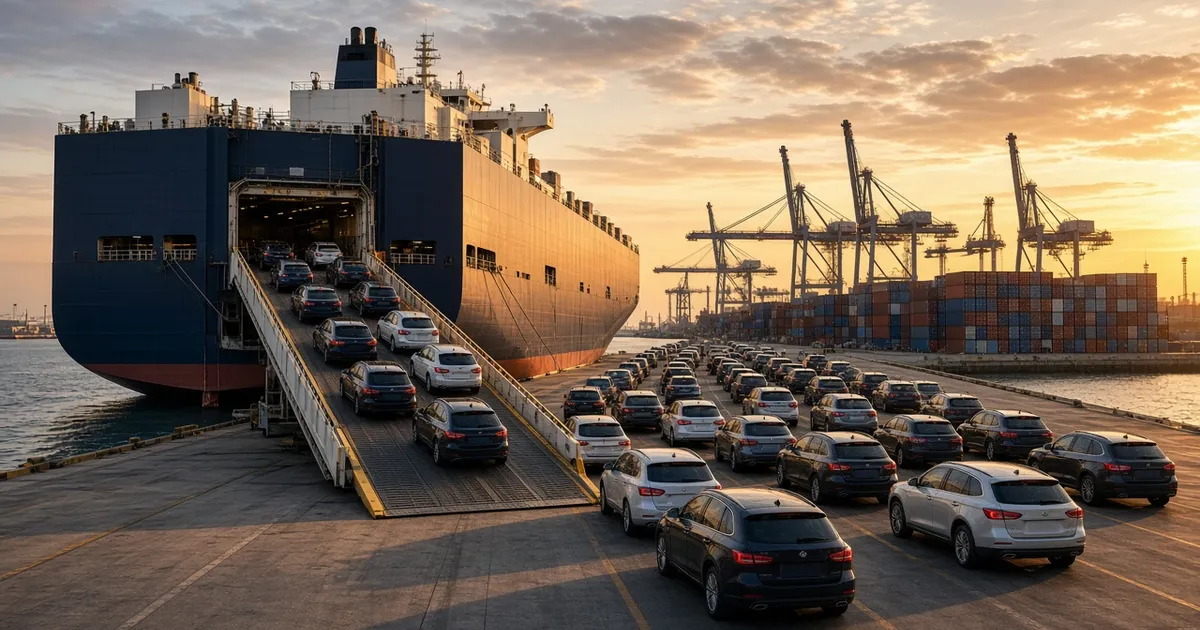
Once you have found the right vehicle in the United States, the next big decision is how it will cross the ocean. Most cars leave U.S. ports one of two ways: roll-on/roll-off (RoRo) or inside a shipping container. Each method has trade-offs in handling, flexibility, timing and paperwork. This guide compares RoRo vs container shipping for cars in plain language so you can ask better questions and choose the option that fits your vehicle and destination.
What RoRo Shipping Means
Roll-on/roll-off ships are essentially floating parking garages. The vehicle is driven onto the vessel at the U.S. port, secured on a deck alongside other vehicles and driven off at the destination port. Because cars move under their own power, RoRo generally works best for vehicles that start, steer and brake normally.
Where RoRo tends to fit
- Running vehicles with no loose cargo inside
- Standard sedans, SUVs, pickups and some larger vehicles, depending on the carrier
- Routes that RoRo carriers serve regularly from East Coast ports
- Buyers who prefer a straightforward, vehicle-only shipment
Carriers usually expect the cabin to be empty of personal items. If you were hoping to pack boxes inside the car, RoRo is often not the right choice—confirm the rules with the carrier before booking.
What Container Shipping Means
With container shipping, the vehicle is loaded into a steel container, blocked and strapped, then sealed for the voyage. Containers may be dedicated to one vehicle or shared with other cargo, depending on how the shipment is arranged.
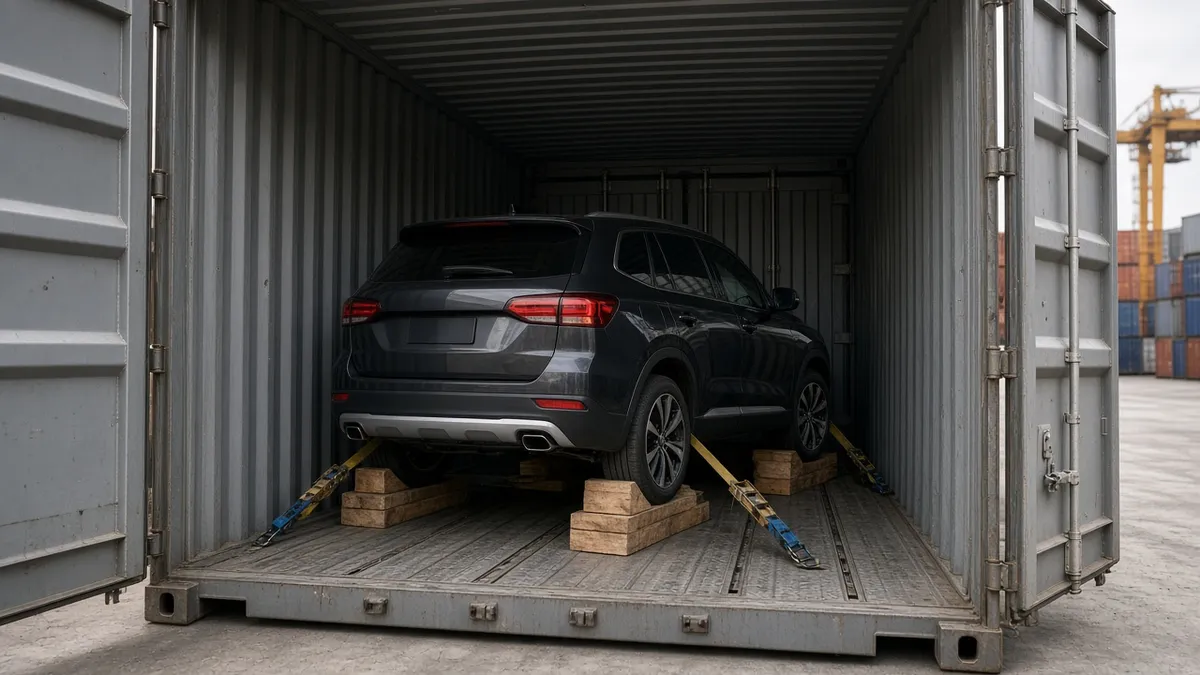
Where container shipping tends to fit
- Classic, rare or high-value vehicles where you want an enclosed space
- Non-running vehicles that can be loaded with equipment
- Shipments that combine a vehicle with permitted parts or other goods
- Destinations or ports that RoRo services do not reach conveniently
RoRo vs Container: Side-by-Side Questions to Ask
There is no single “best” method. Costs, schedules and availability change with routes and seasons, so compare real quotes rather than assumptions. These questions help you compare like for like:
- Condition: Does the vehicle run, or will it need to be pushed, winched or forklifted?
- Value and exposure: Would you be more comfortable with an enclosed, sealed container?
- Contents: Do you need to ship anything besides the vehicle, and is that allowed?
- Ports: Which U.S. departure port and which destination port does each option use?
- Schedule: How often does each service sail on your route, and what cut-off dates apply?
- Destination handling: Who clears the vehicle through customs abroad and who collects it from the port?
- Insurance: What marine cargo coverage is available, and what does it exclude?
When you are working with a freight forwarder or shipping intermediary, the Federal Maritime Commission explains how it licenses and regulates ocean transportation intermediaries. Checking that information is a sensible step before you hand over a vehicle or documents.
Export Paperwork Is the Same Starting Point Either Way
Whichever method you choose, U.S. export requirements come first. U.S. Customs and Border Protection’s guidance on exporting a motor vehicle explains that the certificate of title is the core document in the export process, along with the vehicle identification number and supporting documents. Plan for the vehicle and paperwork to be presented to CBP ahead of the export date, as the rules require.
Many vehicle exports also require an Electronic Export Information filing through the U.S. Census Bureau’s Automated Export System (AES). Your forwarder or exporter of record typically handles that filing, but you should know it exists and keep your documents consistent.
Get the title right before anything ships
Title problems are one of the most common causes of delay. If you are buying in Maryland, the MVA’s page on buying a vehicle outlines what a proper transfer looks like. Make sure liens are released and names match across the bill of sale, title and export documents. Our earlier checklist for buying a used car in the USA for export covers the pre-purchase side in more detail.
Preparing the Vehicle for Either Method
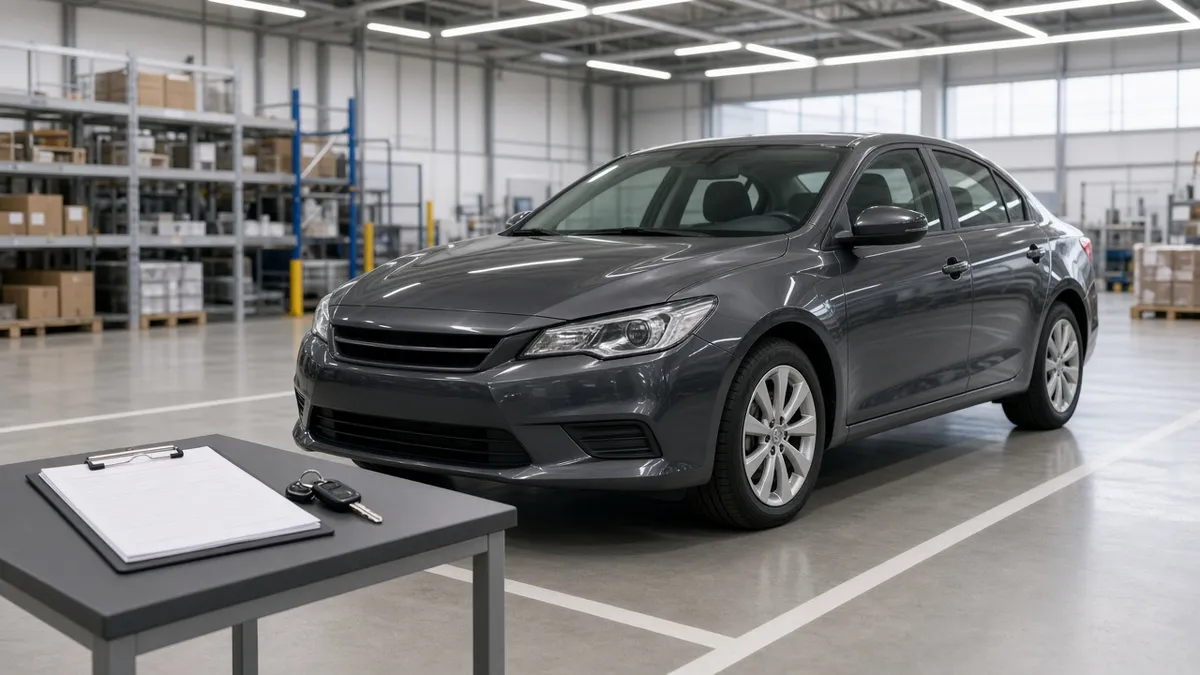
- Remove personal items, toll tags and aftermarket accessories you want to keep
- Photograph the vehicle from every angle and note the odometer reading
- Keep the fuel level low, following the carrier’s instructions
- Note any existing damage on your own records before handover
- Provide working keys and make sure the battery is charged
- Keep copies of the title, bill of sale and booking documents in one place
If you are relocating overseas along with the vehicle, the logistics stack up fast. Many DMV renters schedule a professional clean before handing back keys—Alomo Cleaning Services’ move-out cleaning checklist is a helpful companion while you organize the car shipment.
How MastermindGOC Supports Vehicle Export Buyers
MastermindGOC LLC’s Auto Trading service helps individuals and businesses buy, sell and export vehicles. For international clients, we help source vehicles that match your criteria, support title and transfer paperwork, and coordinate export and shipping arrangements with the parties involved. We will talk through RoRo and container options for your route so you can make an informed choice. For the full step-by-step picture, read our guide on how to export a car from the USA.
Frequently Asked Questions
Is RoRo or container shipping better for a non-running car?
Container shipping is often more practical for non-running vehicles because they can be loaded with equipment. Some RoRo services accept non-runners on certain routes, so ask the carrier directly.
Can I put personal belongings inside the car?
RoRo carriers commonly require an empty cabin. Container shipments may allow other permitted items, but every item must be declared properly. Always confirm the carrier’s rules and the destination country’s import rules first.
Does the shipping method change the U.S. export paperwork?
The core U.S. requirements, such as presenting the title and vehicle details to CBP and any required AES filing, apply either way. Destination-country import rules are a separate step to research.
Talk to MastermindGOC About Your Vehicle Export
Deciding between RoRo vs container shipping for cars is easier when you have someone to walk through the details with you. Contact MastermindGOC LLC at info@mastermindgoc.com or call +1 240-639-2059. We are at 11696 South Laurel Drive, Laurel, MD 20708, and serve clients across the DMV and worldwide. You can also reach us through our contact page.